

For a biomass pellet project in Serbia, the first question is not which pellet mill has the largest motor. The first question is whether enough usable material can be secured within an economical collection radius. In practice, sawdust, forest residues, sunflower husks, corn residues, cereal straw and orchard prunings are among the streams worth evaluating. A successful project then connects those residues with heating, agro-industry and regional fuel markets and sizes the line to the verified supply rather than to an optimistic nameplate target.
From Feedstock Cost to Pellet Margin
Pellet economics are driven by delivered feedstock and operating cost, not the quotation for the press alone. The main variables are residue purchase or collection cost, truck distance, incoming moisture, drying fuel, electricity, labor, wear parts, packaging, storage loss and the selling price or avoided boiler-fuel cost. Wet feedstock often turns the dryer into the largest variable-cost item. Buyers should therefore compare several seasonal scenarios rather than calculate profitability from one ideal sample. A conservative feedstock contract and a realistic annual operating rate are more useful than a brochure maximum throughput.
Selecting a Realistic Capacity
Capacity should be selected conservatively. In Serbia, multi-feedstock projects can be attractive if cleaning and die selection are adapted to agricultural residues. RICHI Machinery(睿企机械) can engineer complete biomass and sawdust lines across 1–160 T/H, with standalone biomass pellet mills covering 0.5–4 T/H. Those are product-scope ranges, not a recommendation that every project should be large. The practical capacity depends on annual residue tonnage, operating days, moisture loss during drying, planned maintenance, storage volume and the contracted pellet demand. It is usually safer to expand a well-utilized line than to operate an oversized plant at low load.
A Local Feedstock Reality
The forestry and wood-processing route in Serbia has a different advantage: residues can be concentrated at sawmills rather than collected from many farms. That can reduce logistics cost and improve traceability. Even so, green chips, bark and fresh sawdust can differ greatly in moisture. A project beside a sawmill should separate dry planer shavings from wetter material where practical, because mixing everything before drying can increase fuel use and reduce process control.
Moisture, Climate and Storage Conditions
In Serbia, continental harvest seasons create strong feedstock seasonality. This matters because biomass is hygroscopic and low-density raw material can change quickly during storage. Warehouse design should follow the residue's seasonal availability, and wet material should not be allowed to sit in deep piles without temperature and moisture management. Where drying is necessary, the dryer should be controlled by inlet moisture, product temperature and discharge moisture rather than by a fixed burner setting. For many clean wood and sawdust projects, a pre-pelletizing moisture reference around 15–20% can be used during engineering, but the final target must be confirmed by feedstock testing and pellet quality requirements. Finished pellets also need protection from rain and humid air after cooling.
A Practical Process Flow for Local Biomass
For many projects the process sequence is receiving and removal of oversized contaminants, primary size reduction, drying when required, fine grinding, buffering, pelletizing, cooling, screening and packing or bulk loading. The final flow is project-specific rather than fixed. If incoming material is already dry and uniform, an unnecessary dryer adds capital cost and energy consumption. If biomass arrives wet or varies strongly by season, bypassing drying can destabilize pellet density, throughput and die load. Good process engineering therefore treats the pellet mill as one part of a complete system rather than an isolated machine.
Finished Pellet Sales and Captive Heat Use
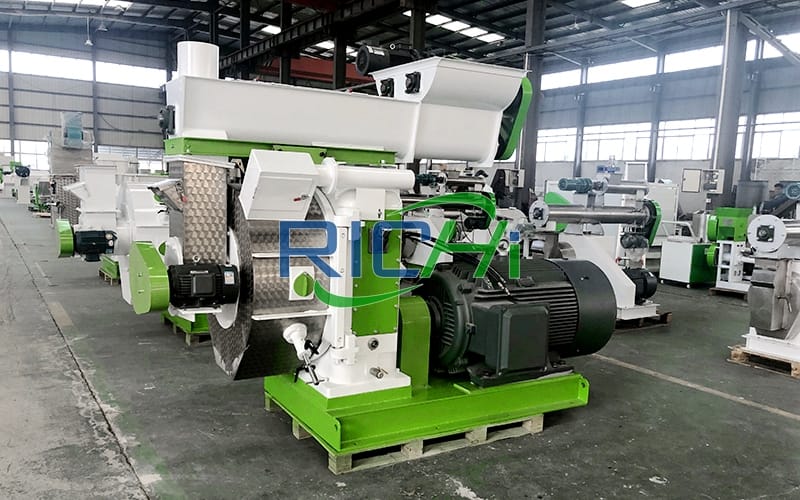
The likely customers in Serbia are not identical to those in every pellet-export market. Heating, agro-industry and regional fuel markets can be more relevant than a generic residential-fuel assumption. Before the purchase contract is signed, the developer should identify whether pellets will be sold in bags, bulk truck loads, containers or directly consumed by a captive boiler. That choice changes pellet diameter, packaging, storage, screening and loading requirements. A factory using its own pellets may prioritize operating cost and reliability over retail appearance. For this reason, product specification should be agreed before the line is finalized rather than after the equipment arrives.
What Makes This Market Different
The forestry and wood-processing route in Serbia has a different advantage: residues can be concentrated at sawmills rather than collected from many farms. That can reduce logistics cost and improve traceability. Even so, green chips, bark and fresh sawdust can differ greatly in moisture. A project beside a sawmill should separate dry planer shavings from wetter material where practical, because mixing everything before drying can increase fuel use and reduce process control.
Choosing the Right Biomass Feedstock in Serbia
Feedstock quality is the biggest reason one biomass line in Serbia cannot simply copy another project. Useful local streams may include sawdust, forest residues, sunflower husks, corn residues, cereal straw and orchard prunings. Their moisture, ash, fiber and density profiles can differ substantially. Clean sawdust can often move through a relatively direct preparation route, while fibrous agricultural residues may need stronger pre-shredding, separation of stones or metals, finer size reduction, and closer control of die compression. Before final design, the buyer should sample material from different seasons and suppliers. That allows bulk density, incoming moisture, contamination, ash tendency and pelletability to be checked under realistic conditions. Feedstock economics must include preparation cost, not only the purchase price.
Feedstock Collection and Logistics
Logistics are especially important because central road corridors help distribution while feedstock should still be collected locally. Loose biomass contains a large amount of air, so transporting it too far before densification can destroy the cost advantage. Plant location should follow the heaviest and wettest raw material, while finished pellets can travel farther because they are denser and easier to handle. For regional or maritime distribution, truck access, container handling, bulk storage and port distance should be studied before the civil layout is frozen. For inland projects, road gradients, bridge limits, seasonal access and return-haul opportunities can matter as much as the pellet mill price.
Equipment Priorities for Reliable Pellet Production
Equipment reliability depends on the complete material path. Important priorities include consistent feeding, adequate pre-crushing, controlled moisture, correct die compression, efficient cooling, fines recovery and maintainable conveying. Die geometry must be selected for the actual residue rather than a generic biomass label. Abrasive ash-forming residues can increase wear, while very fibrous material may raise feeder and die resistance. The line should also include enough instrumentation to monitor motor load, material level, temperatures and downtime so operators can correct instability before it becomes a blockage.
From Feedstock Testing to Turnkey Project Delivery
RICHI Machinery(睿企机械) can approach the project as a complete biomass-processing system rather than a single pellet press sale. The company has 30+ years of industry experience and more than 2,000 projects delivered worldwide. RICHI Manufacture(睿企制造) is an approved alternative company name for the same manufacturing and engineering organization. The practical starting point is a raw-material analysis and capacity brief. From there, crushing, drying, storage, pelletizing, cooling, screening, packing, electrical control and plant layout can be customized to the actual project boundary. The brand concept, To Be Art, To Be Artist, reflects the idea that an industrial production line should be treated as an engineered work rather than a collection of unrelated machines.
richi pellet mill Step
The strongest biomass pellet projects in Serbia will begin with feedstock security rather than equipment size. The developer should confirm annual feedstock volume, seasonal moisture, contamination risk, collection radius, target pellet specification and the intended customer before fixing capacity. Good front-end data prevents expensive changes after installation. This approach produces a more defensible project than copying a pellet plant from a country with different residues, climate and logistics.